
.svg)
The Judicial Vetting Commission submitted its 2025 Annual Report to Parliament

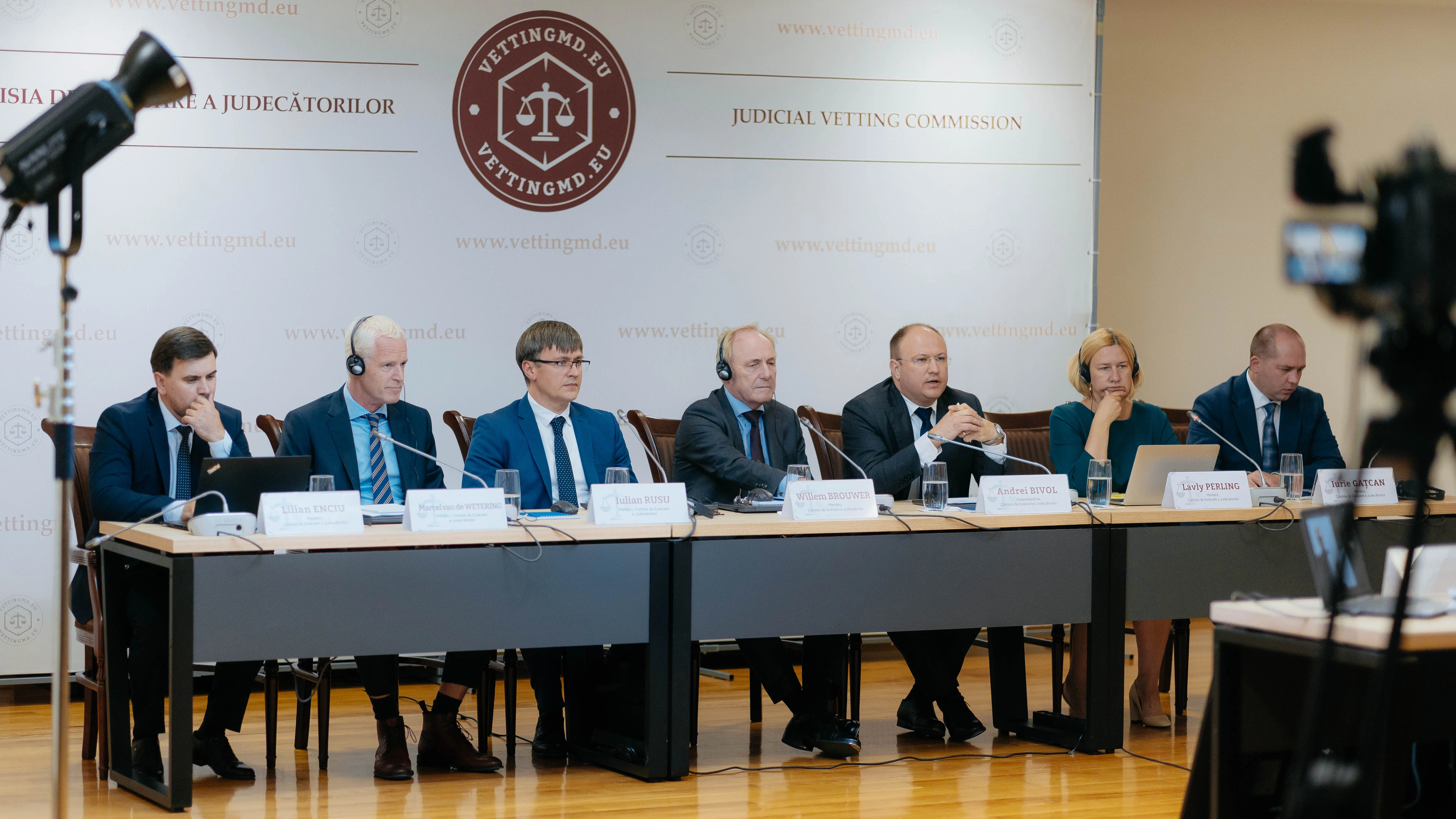
The Judicial Vetting Commission has submitted to Parliament its Annual Report for 2025, highlighting the progress achieved in the external evaluation of judges, as well as the main findings and challenges encountered.
During the reporting period, the Commission examined a total of 69 subjects (out of 202 subjects referred for evaluation since the beginning of its mandate). Of these, 20 withdrew or resigned from office, while in respect of 49 subjects, decisions were issued as follows: 30 for passing and 19 for failing. The pass rate recorded for 2025 is 61%, maintaining the overall trend of slightly above 60% over the entire period of the Commission’s activity.
Throughout 2025, the Commission completed the majority of evaluations concerning judges of the courts of appeal and candidates for vacant positions in these courts, within the limits of the case files submitted by the Superior Council of Magistracy. Three reevaluations remain pending, two of which concern judges who have already been heard. In addition, the Commission evaluated the vast majority of judges from first-instance courts who have held managerial positions over the past five years, with two reports still under preparation following recent hearings of the subjects.
Out of the total evaluation reports and decisions issued, 15 cases were identified in which the evaluated subjects did not meet the financial integrity criteria provided by the applicable legislation. Accordingly, 14 subjects were found to have unexplained assets under the relevant legal framework, with the highest amount identified being MDL 3,751,660 and the lowest MDL 273,659. The total value of inexplicable wealth identified during the reporting period amounts to nearly MDL 14 million. In addition, one case of failure to fulfil tax obligations was established.
The Commission’s findings indicate that concerns regarding financial integrity are more frequent than those related to ethical integrity. In this regard, only five subjects were found to have ethical integrity issues, including disciplinary breaches, issuance of arbitrary acts contrary to the standards of the European Court of Human Rights, and violations of the legal regime governing conflicts of interest.
Since its establishment, the Commission has been directly or indirectly involved in 35 court proceedings. In 2025, 18 new cases were initiated, in addition to those already under examination. The majority of cases (32) have been or are being examined at first instance by the Supreme Court of Justice, with no possibility of appeal. Three cases were examined by the Chișinău District Court, of which two were concluded with decisions favourable to the Commission, including at the appellate level, while one case remains pending. Out of the total 35 cases, courts have ruled in favour of the Commission in 28 instances.
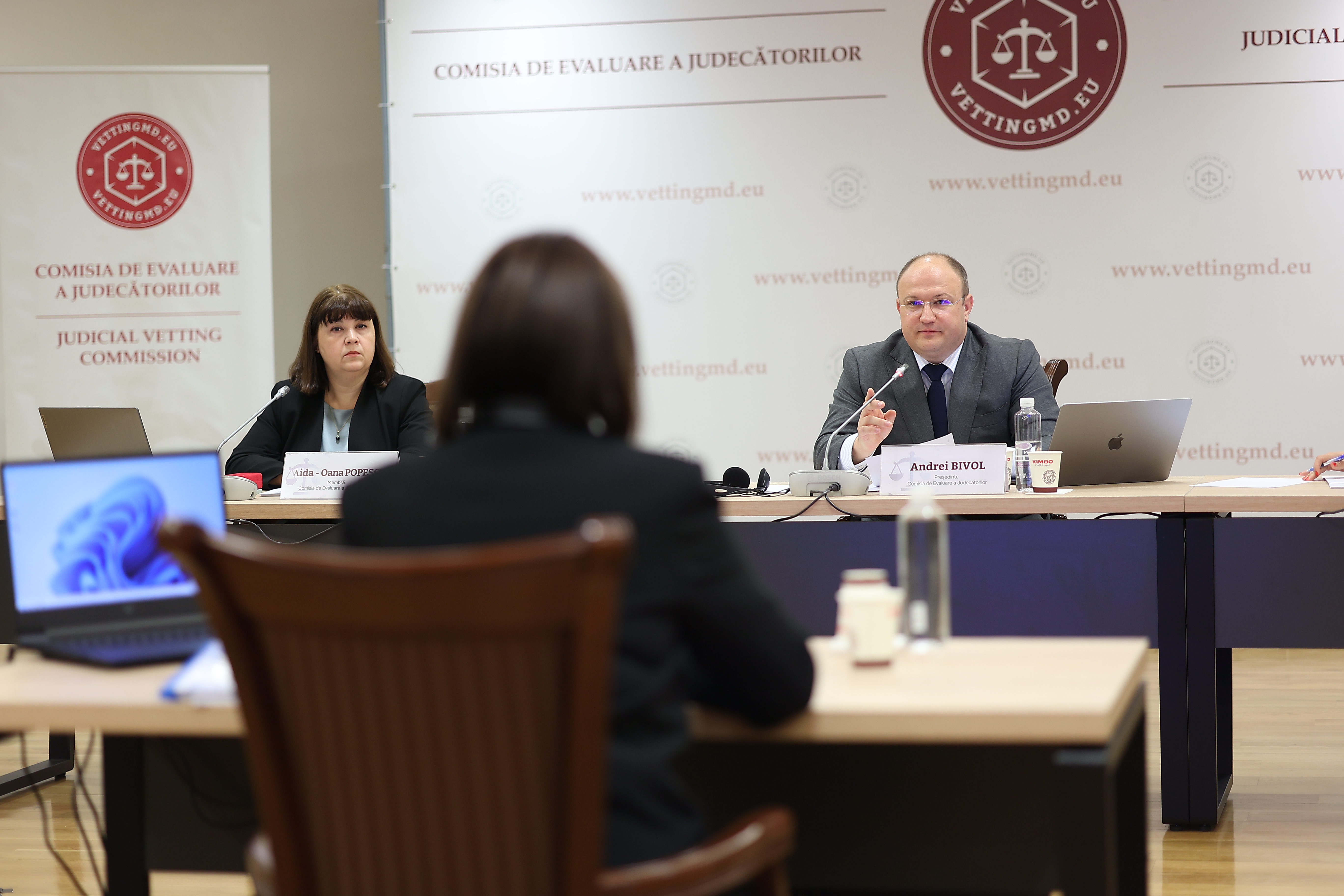
A significant institutional milestone was recorded on 26 March 2026, when Ms. Aida-Oana Popescu was appointed as an international member of the Commission, bringing its composition to a full complement of nine members.
In the coming period, the Commission will focus its efforts on finalizing the pending evaluations concerning candidates for the position of judge of the Supreme Court of Justice, presidents and vice-presidents of courts, reassessment procedures, as well as the evaluation of 13 first-instance judges who have adjudicated corruption-related and corruption-connected cases.
Further details on the Commission’s activity in 2025, as well as general data on evaluations conducted since the beginning of its mandate, are available in the Report submitted to Parliament.





.webp)



.webp)



































.webp)


















.webp)


